The Land of Opportunity

Yesterday, after lunch, I wandered into my garden with the intention of just looking to see where things stood in terms of crop development and so forth.   While there, it became readily apparent that I had ignored several beds for who knows how long, and the soil I had so painstakingly amended and attended to had become somewhat overgrown with weeds.

We have had good periods of rain lately followed by lots of sun which in turn will aid in the production of vile grasses and opportunistic plant-like bushes with roots that seem to go all the way to China.

Anybody who has ever grown a garden is familiar with this story. It seems that it has been this way since Adam and Eve were expunged from the original garden and destined to scrape and scrap the earth for every bit of food they could.

The truth is, no matter how careful you are in pulling weeds, even after a shower when they come out without much effort, there will always be more every year. I don’t fully understand how this happens but I know that it is true. As long as it is called “today” you will have “weeds”. I think it is even in the Bible—or was that “troubles”?

Anyway, and to the point of this post, pulling weeds is the epitome of a “window of opportunity” scenario. Window of opportunity is defined as: A short period of time during which an opportunity must be acted on or missed.   Weeding the garden is all this and more. You are either in the mood or not. If you are not, you walk past the weeds and busy your mind with other, more important thoughts and actions.

If you find that the thought of getting on your hands and knees is not repellent, you need to strike while the iron is hot.   Actually weeding while you are in the mood is a very satisfying endeavour—once you are done of course. At that point your hands ache and are covered with dirt (life giving soil for those of you who are mostly organic) and your knees—well you can’t really feel your knees at all by that time.

However, as you stumble away and towards the sink, you take a moment and look back at that carefully prepared plot of soil and the satisfaction of a job well done is all the reward you need. Take it from me.

Here’s hoping that next year won’t be quite as weedy. Enjoy your ride.
Posted in Describe Your Ride | Tagged | Leave a comment

A Continuing Conudrum

With so many points of view today on so many different contemporary topics, I make no apologies that my “world view” filter is mostly through a Judeo/Christian lens. Whatever the topic, from gardening to gun control all the way back to abortion and beyond, my thoughts are formed by what I believe about where we came from and how the earth was initially birthed.

There is no doubt in my mind that there is a creator God who sent His Son to earth to set us free. That I can’t always figure God out or understand how everything fits together is just one of those things that we, as human beings, live with. (1 Corinthians 13:12 New American Standard Bible (NASB) 12 For now we see in a mirror dimly, but then face to face; now I know in part, but then I will know fully just as I also have been fully known.)

Lately I have been challenged to reassess my feelings and/or thoughts concerning the United States and whether or not we have ever been a “Christian Nation”. There are many thought streams floating past us that would suggest that we, as a nation, need to return to our roots in order to avoid God’s judgement on our united states.

That we have fallen away or turned our backs (judicial and otherwise) from many of the principles that our great nation was founded on is not in doubt. We have gone from children in territorial schools using the Bible as a reading primer to a theory of separation of church and state that almost prohibits bibles from being read in public schools.

I firmly believe that our nation was very much founded on Judeo/Christian ideals but that most of those political movers and shakers were indeed “Deists” who did not necessarily believe that Jesus was Lord and savior. Be that as it may, research that I have done suggests that a great percentage of the population at that point in our history were what we would call believers.

In my opinion, God does not “bless” nations—He blesses people. If all those people are gathered into a nation, then that nation can receive whatever it is that God wants for them collectively. When I hear that we must return to our Christian roots to avoid God’s judgement or that we are already under judgement, I am not so sure that I fully understand what is really being said.

There was a time, not so long ago, when I thought I understood this—that as a nation, we had to return to this golden era and everything would be all right.

A while back I listened to a teaching by Kris Vallotton that really caused me to think about God’s judgement and what that really means. His belief was that, we as a nation, were not yet being judged by God but that in reality we were reaping what we had/have sown.

The reaping and sowing principle is mentioned several times and in many different ways in the Bible. It is sort of like cause and effect—when we choose an action we choose the consequences of that action as well. Most farmers know what this means—if you plant just a few seeds you only harvest a few vegetables. From a spiritual point of view, if you sow bad stuff you reap bad stuff.

What Vallotton used in his sowing and reaping text was the issue of legalized abortion in the United States. In a nutshell, his theory was that we were in effect judging ourselves by allowing millions of babies to be aborted and in a cause and effect sort of way, we had therefore denied ourselves of all the benefits that many of those aborted, might have brought to us, had they been allowed to live.

It is not a stretch to imagine that amongst the millions aborted there may have been some who might have lived to find a cure for cancer. How many doctors, economists, scientists, humanitarians, and you name it are not among the living today because of Roe v Wade.

What I have gathered from this teaching is that we don’t really need God to judge us for whatever reason we might deserve—we are doing a pretty good job on our very own. And if we keep it up, we will, as a nation, be in for a lot more cause and effect consequences. I realize that this subject is huge and I cannot really do it justice in a few hundred word blog.

What I have realized is this—before a nation can return to anything, the individuals that make up that nation must return. In other words, you can’t really say the church in America is not being a light without looking at the people who collectively are the church.

In other words, it is my responsibility to be the light and salt. It is out of my belly that rivers of living water flow. I am the temple of the Holy Spirit—God lives in me and is not sequestered in some steeple clad brick building on the corner of here and beyond.

It all comes down to the “people” level. If my “people” who are called by my name, humble themselves and pray…..He will hear our prayer and heal our nation”. My question is this: am I really up to the task as a “seed bearing” Christian to allow these seeds within me to be scattered about in order that good fruit will be brought forth. I don’t have the answer yet, but this is the path that I am on and looking for the long ride.

Posted in Describe Your Ride, Uncategorized | 1 Comment

Greenhouse Progress Post

Posted in Uncategorized | Leave a comment

A Moment Of Clarity

Someday

This will all be someone else’s to go through.

I will be gone and yet there will still be parts of me left behind.

My father left behind an apartment full of memories and it was my task as the oldest to assemble and sort through the boxes and drawers of stuff he left behind.

My reaction at the time was to vow that I would never do the same—leave all that stuff behind for someone else to sort through.

Yet we live and we collect boxes full of old birthday and father’s day cards—so precious at the moment of receiving and yet saved—as if to say—the meaning of that moment will be diminished—if not kept.

As I sort through a basement full of years and years of collecting, I am reminded of my vow—my intention being so very clear at that moment of introspection in my dad’s apartment.

I need to be firm in my resolve—yet I hesitate.

Two boxes of stuff become one yet one remains—perhaps only meaningful in that moment to me.

I cling to a past that will never pass this way again—I guess that is because this is what humans do—collect memories as mementos to a life lived in order to feel good about the days we have been given.

I sense the ship is about to sail and there is limited luggage space.

(Written 12/29/2012)

Posted in Describe Your Ride | Leave a comment

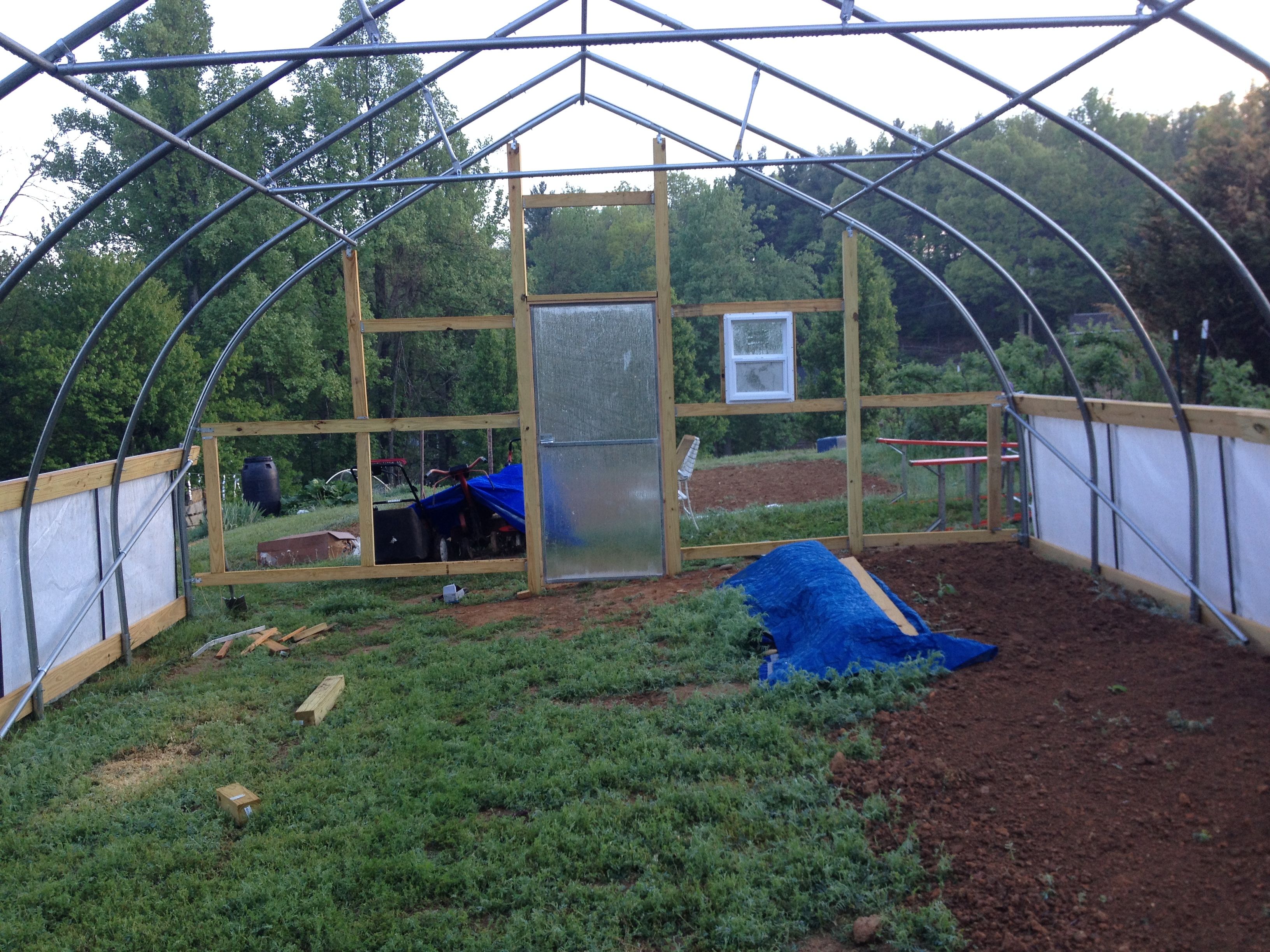
Cold Frame/Greenhouse Progress

IMG_1067Ends are in and doors.

Cold Frame/Greenhouse Progress

Posted in Uncategorized | Leave a comment

Ray Bradbury A Prophet?

Before I go to far, let me just mention that this title thought comes as a result of a conference that Sandi and I attended this past weekend in Boone. 

Without going into much detail, the main speaker spent several hours over a two day period more or less outlining his experiences in and around what God is doing in the earth today. By following what he believes he is hearing from God, he has found himself in some pretty incredible places interacting with some very interesting people, who not only knew the part they played in this adventure but were often the very means by which he discovered the next link in what has become a life’s work and calling.
Suffice it to say it is always amazing to me when the pieces of life’s puzzle come together.
As a Christian, I believe that we have the ability to interact with Christ in a personal way on a daily, hourly and/or a minute by minute basis. In other words, using a radio metaphor, He is always broadcasting but we are not always tuned into the channel He is on. 
So when someone says that they hear God and that He told them to do this or to go here or there, I am not hard pressed to believe in this reality.
It came to me the other day that there are two types of hearing God—one way can be called “passive listening” because He said that He is always with us. In other words, many of the thoughts that occur to us during a day, can be Him speaking (as opposed to the noise that fills the world and our minds) but we are not so involved in differentiating them. The other type of listening is more “active” and can be typified by a diligent hunger and thirst to be involved with Him and pursuing His “presence”.
Much of what the conference speaker spoke involved the United States and it’s future. I am not an alarmist, but it is not hard for the natural eye to see the signs of a world that is in a lot of hurt. I am also not what you call a “prepper” although I do believe that we have a responsibility to be prepared for whats ahead of us—be that an ice storm that takes out the power grid or a time of drought or a disruption in our food supply chain. 
In light of this, the conference speaker made the connection between people hearing God and those same people being a part of something much bigger that is happening in America—sort of underground as it may be.
He told us of some people stockpiling toilet paper while other people are not but are storing something else—some people are buying guns and other people are not “feeling” to buy any weapons at all.
I guess in order to fully understand what I am saying, or trying to relate, you would have had to be there in person. However, what the speaker was trying to communicate on a very simple level was the fact that if people were tuned into God, they would know what to do (store up) and what not to do. 
Being prepared for the worst is a gamble at best—or so I thought. Since we are only 9 meals from anarchy in America, those people that don’t have will be on my door step once they realize that I do. Plain and simple—you can then either shoot them or share—knowing this: no one person can ever do it all and it seems like if you planned on feeding 4 for a month or two and suddenly there are 10 of you, your  stockpile won’t last as long as you would have hoped.
But that is what I would term thinking in the natural.
What I saw this weekend is that in the supernatural, we are not limited to only what we have but in a a greater sense, when the body of Christ comes out of the woodwork (church building), there is perhaps no limit to what God can do through us.
That is if you are listening.
Let him who has ears hear what the spirit is saying to the church (the ecclesia). God does nothing that he first doesn’t reveal to his servants the prophets.
And this is where Ray Bradbury comes in. In Fahrenheit 451 there is a scene in the woods where groups of people live and their sole mission in life is to keep alive the classics that have been burned. Some have memorized chapters and some whole books, which if memory serves, are then verbally passed on to others with the intent of keeping these book classics alive.
One person can’t do it all—it takes a team effort.
And so will making it through a crisis in America—a team effort will be required.
I will trade you a tube of toothpaste for a box of teabags and so on down the line.
Read between the lines—there is a lot more that I could say and a lot more that I have to learn but today begins the “long ride” that we have been on for quite some time.
We are not preparing for a time of fearful expectation but for a time of God’s glory to be revealed in the earth like we have never seen.
And that’s a ride worth going on.
Posted in Describe Your Ride | 1 Comment

More Than A Feeling

A little more than a year ago I had a feeling that seemed like a word of knowledge about the future as it pertained to water. In that moment the thought being downloaded to me suggested that water, in the years to come, would be more valuable than gold and silver. Over the years I have had several of these “God thoughts” that randomly place themselves at the forefront of my conscious mind. They seem very important at the time and I always share them with a friend or two before they are packed away as if in waiting for the next piece of the life’s puzzle I live.

So it didn’t come as much of a surprise when I read an article a month or two ago about water rights in some of our western states. Seems like you can be arrested for collecting rain water in buckets in those states because laws enacted years ago give other people the rights to water in the air and by not allowing it to go into the ground and supposedly feed the streams and rivers, you are depriving them of this resource. This is still true even though scientific studies have shown that most of this water is absorbed into the ground and never makes it very far.
Another article I read that seemed to make my point as well, told of how many big corporations are buying land in other countries and in so doing are also buying the water rights as well. I got the feeling that these mega-businesses know a lot more than the general population.
All of this water-thought got me wondering about our food supply chain—what with agribusiness consolidating much of it’s crop production in areas like California which is experiencing some historic drought conditions.
When I moved to North Carolina in 1978 I worked as a carpenter for the first year and then took a job with the US and for a brief period in 1979-80 became a quality control person for the census. I had three mountain counties—Ashe, Allegany and Watauga—which were mine to scope out and do some preliminary work which would them be used by the bureau to qualify the people who actually did the door to door work later on.
During this time it seemed like I traveled every road and showed up in every nook and cranny that each county had to offer. One thing I noticed was that Allegany County had lots of dairy farms. In talking with someone from their Ag. Extension program, it is estimated there were well over a hundred dairy farms in Allegany county in the 80’s. There are currently 5 left.
Another scary piece of info: A web search for milk production led me to the fact that California produces 25% of the milk that is consumed in the United States. Guess what is going to happen to the price of milk.
The conclusion I have come to is that if our mountain counties were cut off from the rest of the world by a national emergency, we would not be able to provide food for our current population. I would venture a guess that many counties in America are in much the same boat, due in fact to the green revolution and agi-business consolidating much food production in just a few locations throughout just a few states.
And this my friends is just the tip of the proverbial iceberg.
I am not a “prepper”—but I do like to be prepared. Last year between the rains in Boone and the outrageous deer population, I barely harvested any beans or peppers or tomatoes. 
This year, Sandi and I will buy a 20 x 36 foot hoop house/cold frame and begin the process of growing stuff undercover. Not only will we keep the deer away (they eat upwards of 7 pounds of food a day) but we will extend our growing season by a significant amount as well.
This is, as I see it, the future—people taking back the business of growing food square foot by square foot until our entire country is back in the food production business and growing heirloom crops to boot. Monsanto better watch their p’s and q’s cause growing food should not be something that any one or two company’s have a patent on.
And that’s my ride for today.
Posted in Describe Your Ride | 2 Comments

Pete Seeger’s Long Ride

Pete Seeger’s recent passing has given me pause to reflect upon the not so subtle influence that he has had on my life. From the time I first heard about him through this very day, Pete and his music have had a positive effect on me and perhaps not as noticeable effect on my children.

This story really begins with Bob Dylan singing about Woody Guthrie on his first album for Columbia records: 
Hey, hey, Woody Guthrie, I wrote you a song
’Bout a funny ol’ world that’s a-comin’ along…
As a avid archivist, I was intrigued by all the connections that Dylan pointed out to those of us who had ears to hear. In 1965 I was walking the line between 9th and 10th grades and felt, to the best of my recollection, all the turmoil that was blowing in the wind during those very formative years. 
Vanguard Records had an “Two-For” album collection that included Doc Watson, Ian and Sylvia, Richard and Mimi Farina and Dave Van Ronk, just to name a few of the more prominent artists of that day. 
In those days, you could only get about 16-20 minutes on each side of vinyl disc, so in effect, two albums might only have 64 minutes on all four sides. In comparison, a current CD can have up to 80 minutes of music on it.
It was a small world for me growing up in Port Huron, Michigan. I don’t really remember having anyone to share my interest in folk music with. Listening to these many musicians was one thing that kept me sane and helped me maneuver  through those tumultuous years. Though this channel would ebb and flow over time, it was always and anchor for me.
I might also add that I have never really considered myself to be a great singer, so it was with great delight that I took Woody’s advice and sang the old songs I discovered in such a way that I could be comfortable with them. This doesn’t mean that I sang them the way they were recorded, just the way I felt that my voice could handle them. In other words, I was not a copy artist but a loose interpreter of songs. 
I remember a girlfriend of mine who had perfect pitch telling me that I couldn’t sing—a statement which bothered me for many long years—until I realized (much to much later in life) that she was not saying I could not sing, just that I didn’t sing the songs the way they were recorded and therefore meant to be sung again and again. In the larger scheme of things, I was never going to be a traveling minstrel, but this type of information was definitely not helpful in forming a positive self-image.
I could dwell on these many past memories but for the sake of time will jump into the 80’s and 90’s and the era of having children and all those pleasant things.
One of my favorite all time Pete Seeger albums was called “Story Songs” and was a live performance recorded at The Village Gate on April 30, 1961. It included the song “The Foolish Frog” which was to become one of our children’s favorites. That song, along with “Abiyoyo”, “Sweepy, Sweepy, Sweepy” and “Where’s My Pajama’s” became before bedtime standards around the Henry hacienda. 
Although I doubt that my children will admit to it today, these songs and many others helped us make it through many hours in the rocking chair during ear infections, tummy aches and those hours spent trying to get them to wind down before bedtime. 
My youngest (she’s 20 now) Laura loved to swing and we’d spend lots of time in the back yard with her swinging and me learning to play the mandolin and singing “Put Your Finger In The Air”, “Take You Riding In My Car” and other Seeger classics that he had sung with Woody and others over the years. Now that I am learning the play the Ukelele, I guess I need to pull this songs out of hibernation and bring them to life again (for the grandkids, y’all).
As you can probably tell by this point, I could go on and on in mining this rich motherlode of memories. I have covered a period of about 40 years in just a few sentences. Suffice it to say, I have done a lot of hard traveling as well in between. Nevertheless, my life has reached a period of relative calm and dwelling within a safe harbor. The winds of change are still swirling and uncertainly abounds—not much different than those middle 60’s years.
What has changed however is that we are filled with many memories and good thoughts about life and living and having known people like Pete Seeger, however brief, has changed the way we live for the better.
And that’s a good ride, don’t ya know.
Posted in Describe Your Ride | 1 Comment

A Crisis Of…Identity?

According to Webster online an “Identity Crisis” is:

…a feeling of unhappiness and confusion caused by not being sure about what type of person you really are or what the true purpose of your life is

or a

…personal psychosocial conflict especially in adolescence that involves confusion about one’s social role and often a sense of loss of continuity to one’s personality.
Identity Crisis is a term that Erik Erickson coined in the late sixties to describe the maturation process an adolescent travels on his or her way to becoming an adult. Success in this process leaves the adolescent with a strong sense of identity and well equipped to face adulthood with confidence and certainty.
An Identity Crisis and what can be termed an “Existential Crisis” are somewhat similar in the fact that each can be defined as a moment when an individual begins to question any of the foundational aspects of their life. 
Foundational aspects can range from a new-found grasp or appreciation of one’s mortality to questioning one’s direction or purpose in life.
And we can already see by what has been said up to this point that forming a strong identity in your teens can be very beneficial in the long term.
Yes, we all have days when things don’t seem to make sense. There are those times when your job doesn’t seem to satisfy and your relationships seem hollow and superficial. I am sure that we all have suffered from survivors guilt when we hear about someone 10-20 years our junior who has just had a massive heart attack or passed away after a cancer diagnosis. And just understanding that life is not fair does not go a long way in helping us adjust to all the stuff that happens, all around us, everyday.
I have been wounded by church leaders and abandoned and betrayed by so-called friends. I am certainly not alone in this.
I made it through a physically and verbally abusive childhood with enough of myself intact to then be blessed with a fantastic marriage and great family in my later years.
Yet at this point in my journey, the water that surrounds me seems rather shallow. My purpose in life seems sort of contrary to what I believed it would be at this age and/or juncture. My sense of what it means to be a Christian even seems somewhat suspect: bearing in mind that several years ago I really thought I had many of those questions answered and filed away in that great heavenly storehouse.
And while I haven’t been quite content for sometime now, my security was torn apart at the end of last year during a sermon at a small local church. Yes, I more or less thought I was in a safe harbor until the church’s pastor, talking about resolutions vs. renewal and the world’s perception of who we are as Christians, stated that what makes us different is our ability to walk with God’s presence emanating from us. When Moses was called to take the children of Israel into the promised land, he informed God that if His presence did not go with them, they would stay right where they were (Exodus 15:33).
So, instead of relying on the works that we do being used to peak the world’s interest about what we have and why we are different, I came to the conclusion that somehow, it would be the manifest presence of God that would draw people to Him through me. A lofty thought indeed. In other words, we can learn to be patient and loving and kind by reading books that can be checked out of the library, but the proof of our Christian-ness is not in what we do or act like, but the Christ-like-ness that we are in the process of becoming. 
I guess it has always been this way since the beginning: yours and mine and all the way back to New Testament times. The reality of Christ in us, the hope of glory. Pure, undefiled religion and worship in spirit and truth and all that.
We all have, I believe, lost ourselves in church doctrines and leadership and follower models that seemed to bring life at the time but only led us further and further from the simplicity of what it really means to be a part of the body of Christ. 
So where I find myself today, more than a little disoriented and somewhat dismayed, is not really a bad place to be if I can only look at it as another beginning rather than a disappointing end to somewhere I have been for much to long. 
Like that saying goes, the best is yet to come or the glory of the latter house will be greater than that of the former house. 
Let the ride commence! 
Posted in Describe Your Ride | 3 Comments

William Shakespeare As An Anomaly?

This article was written as sort of a weekly column for the Jefferson Times on Thursday, March 3, 1983. I was a staff reporter at the time and my column was called “Just Common” after a local Ashe County, NC phrase in response to the question, “How are you today?” I will reprint these as I find them. This one seems to be almost prophetic in nature IMHO. Remember, this was long before the internet and Facebook and Twitter.

Just about everybody, at one time or another, has probably said, “I wish I could play the piano.” I know I have and with that particular thought the fantasies that accompany it.

Like becoming a renowned Bach interpreter in the mold of Glenn Gould or a famous jazz pianist like Thelonious Monk; both of whom have recently passed from this scene.
Well, apparently many people have also expressed the desire to learn to write and produce a best-seller, almost as if it can be learned in ten easy lessons like the popular ads in Mechanics Illustrated claim.
Yet Hugh Kenner, in a recent magazine article, says that “Writing is an abnormal act in today’s electronic world.”
He says, and rightly so, that eople do less writing today than they did fifty years ago when people used to write invitations to come to lunch and received responses in kind. So picking up a pen was not abnormal then.
However, the telephone changed all that; so that now it would indeed be the “rare bird” among us who would write and invitation for supper and take the time to put a 20 cent stamp on it and make sure it got to the mailbox…while within a minute of two, at a very basic monthly charge, he or she can call and extend the same invitation.
Romeo, Romeo, wherefore art thou?
Anyway, Kenner says that it’s difficult to teach children to write in this day and age, because many children can’t see when they will ever have to use the skill. Therefore, there is no desire to attain it in the first place, much less master it.
I can only assume it is something like me and geometry; the teacher said I had the ability to understand the concepts involved and do the work, but I lacked the desire because I couldn’t see how it was going to affect my life. It was this attitude that no doubt produced the consistent C-minus grades in math.
Now I am not saying that I would be adverse to having my teacher sit down with me at this point in my life and show me how I might have used that geometrical knowledge; but, I have to admit, I’ve not needed it.
That’s probably the reason that I am writing for the TIMES rather than out surveying property; even though at one time I was employed by an engineering firm for just that purpose.
Romeo, Romeo…!
What Kenner says is that we used to get nearly all of our information from reading. At that time writing was a visible communication form and people were accustomed to interpreting it and utilizing it.
But now we get the majority of our information from looking and listening, rather than reading, so writing has become a subsidiary skill.
So, how do we learn to write in the first place?
By READING.
A great deal is learned by watching one’s mental process while reading. In other words, you learn to write by watching yourself read.
And right he is. You may not notice that comma that dropped off my last front page story, but I did; because I had a reason for putting it there in the first place.
Therefore, if you don’t read that much, the urge to write is probably a result of the pizza that you had last night.
Kenner is afraid that because kids don’t read or write as much they will grow up with the television anchorman as a role model for speech patterns, patterns that are not normal everyday inflections but simply words read from a script.
And what about those great lines that come across on the soaps?
Suffice it to say, those that do write will have conferred on them a certain authority, deserved or not, over what is written.
Pictures are already replacing what words at one time used to portray.
And if this continues, are we really that far away from a type of “NewSpeak” that is written about in Orwell’s ” “1984”, where we don’t add to our vocabulary every year, but rather subtract from it.
I C D B. Do U 2.
10-4.
Posted in Describe Your Ride, Writing | 1 Comment